
SEO, or search engine optimization, is the process of improving a website so it can appear higher in search engine results like Google. When someone searches for something online, Google looks through billions of web pages to find the most relevant and useful results. SEO helps Google understand what your website is about and why it is useful to the people searching. This simple guide explains how SEO works, step by step, and what it takes to rank.
- SEO helps the right people find your website when they are searching for what you offer.
- It has three main parts: on-page SEO, technical SEO and off-page SEO.
- Search engines crawl, index and then rank pages based on relevance and quality.
- SEO takes time, but the results keep building long after the work is done.
How Search Engines Work: Crawl, Index, Rank
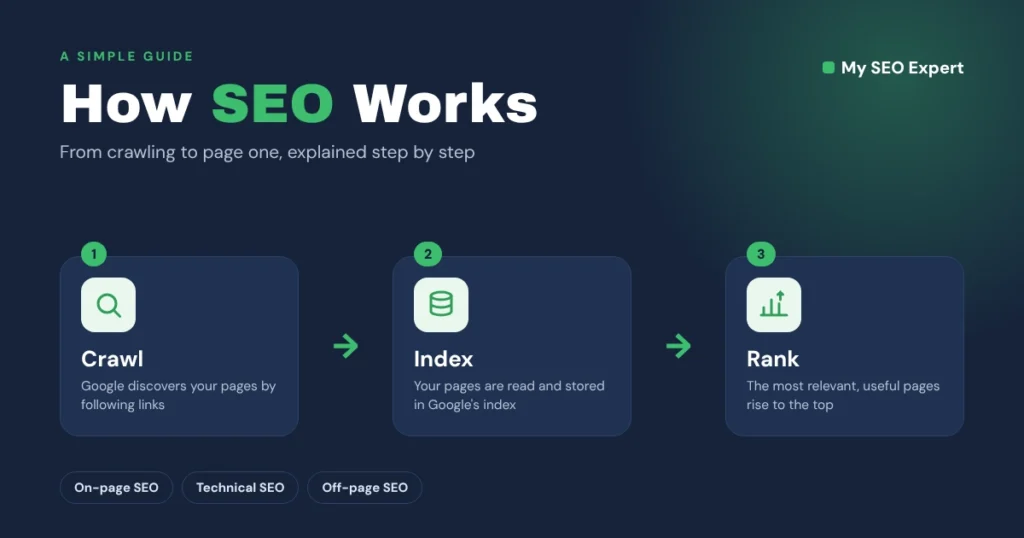
Before you can rank, search engines need to find and understand your pages. This happens in three stages:
| Stage | What happens | What helps |
|---|---|---|
| 1. Crawling | Search engine bots follow links to discover pages on your website | Clear navigation, internal links and an XML sitemap |
| 2. Indexing | Google reads each page and stores it in its index | Unique content, correct tags and no technical blocks |
| 3. Ranking | When someone searches, Google picks the most relevant and useful pages and orders them | Helpful content, a fast site, good user experience and authority |
The Three Main Areas of SEO
1. On-page SEO
On-page SEO is everything you optimize on the page itself, so search engines and visitors understand it clearly:
- Page titles and meta descriptions: what appears in Google's results
- Headings: a clear structure with one main heading and logical sub-headings
- Keywords: the words your customers actually search for, used naturally
- Content: useful, complete answers to the searcher's question
- URLs: short, readable and descriptive
- Images: compressed files with descriptive alt text
- Internal links: links between related pages on your own site
2. Technical SEO
Technical SEO looks after the health of your website, so search engines can crawl it easily and visitors have a smooth experience:
- Page speed and Core Web Vitals
- Mobile-friendly design
- Clear site structure and navigation
- Indexing settings, sitemaps and robots rules
- Fixing broken links and redirect errors
- Security with HTTPS
- Structured data (schema) that helps Google understand your business
A slow or outdated website can hold back every other SEO effort. Our WordPress development service builds fast, SEO-ready websites.
3. Off-page SEO
Off-page SEO covers signals from outside your website that show search engines your site is trusted:
- Backlinks from reputable, relevant websites
- Mentions of your brand online
- Listings in trusted directories for your industry and area
- Overall online authority and reputation
On-Page vs Technical vs Off-Page SEO at a Glance
| Area | Focus | Examples |
|---|---|---|
| On-page SEO | The content and structure of each page | Titles, headings, keywords, content, images, internal links |
| Technical SEO | The health and performance of the whole site | Speed, mobile design, indexing, broken links, HTTPS, schema |
| Off-page SEO | Trust and authority from other websites | Backlinks, brand mentions, directory listings |
Types of SEO for Different Goals
- SEO: ranking for searches across a country or the whole market.
- Local SEO: ranking for "near me" and city searches, ideal for service businesses such as contractors, clinics and limo companies.
- AI SEO, GEO and AEO: helping your business appear in AI answers, such as Google's AI Overviews and ChatGPT.
What Happens After You Optimize?
Once your pages are optimized, search engines crawl them again, update their index and reassess where your pages should rank. Good SEO is not about adding lots of keywords. It is about creating helpful content, keeping the website technically sound and giving visitors a good experience. When those three come together, rankings follow.
How Long Does SEO Take?
| Timeframe | What usually happens |
|---|---|
| Months 1 to 2 | Audit, technical fixes, keyword research and content planning |
| Months 3 to 4 | New and improved pages indexed, first ranking gains |
| Months 5 to 6 | Steady growth in organic traffic and enquiries |
| Month 6 onwards | Stronger rankings for competitive searches and compounding results |
SEO does not usually give instant results. If you need leads straight away, Google Ads can bring traffic while your SEO grows.
SEO vs Paid Ads
| Point | SEO | Paid ads (PPC) |
|---|---|---|
| Cost per click | No cost per click | You pay for every click |
| Speed | Builds over months | Traffic from day one |
| Long-term value | Pages keep ranking after the work is done | Traffic stops when the budget stops |
| Best for | Lasting, lower-cost growth | Quick leads, launches and seasonal offers |
Many businesses use both. See our PPC services for paid campaigns that work alongside SEO.
Final Thought
SEO takes time, but with consistent optimization, useful content, technical improvements and authority building, a website can steadily attract more organic traffic and reach more potential customers. In simple terms, SEO helps the right people find your website when they are searching for what you offer.
Frequently Asked Questions
What is SEO in simple words?
SEO is the work of improving your website so it shows up higher on Google when people search for what you offer.
How does SEO work?
Search engines crawl your website, index its pages and rank them by relevance and quality. SEO improves your content, technical setup and authority so your pages rank higher.
What are the three main types of SEO?
On-page SEO (content and page structure), technical SEO (site speed, mobile design and indexing) and off-page SEO (backlinks and authority from other websites).
How long does SEO take to show results?
Most websites see first gains in 3 to 4 months and steady growth by month 6. Competitive industries can take longer.
Is SEO better than Google Ads?
They do different jobs. Google Ads brings traffic quickly but stops when you stop paying. SEO takes longer but builds lasting traffic without paying per click. Many businesses use both.
Do I need local SEO for my business?
If you serve customers in specific cities or areas, yes. Local SEO helps you appear for "near me" and city searches where your customers are looking.
Can I do SEO myself?
You can handle the basics, such as clear titles and helpful content. Technical SEO, competitive keyword strategy and authority building usually need specialist experience to get strong results.
Want to Know How Your Website Can Rank Higher?
Get a free SEO audit. We will check your on-page, technical and off-page SEO and show you the fastest wins for your website.